agentlinkops
Backlink gap analysis with evidence
Run backlink gap analysis with comparable inventories, clear grouping, and dated evidence. Learn which missing rows deserve inspection before calling them gaps.
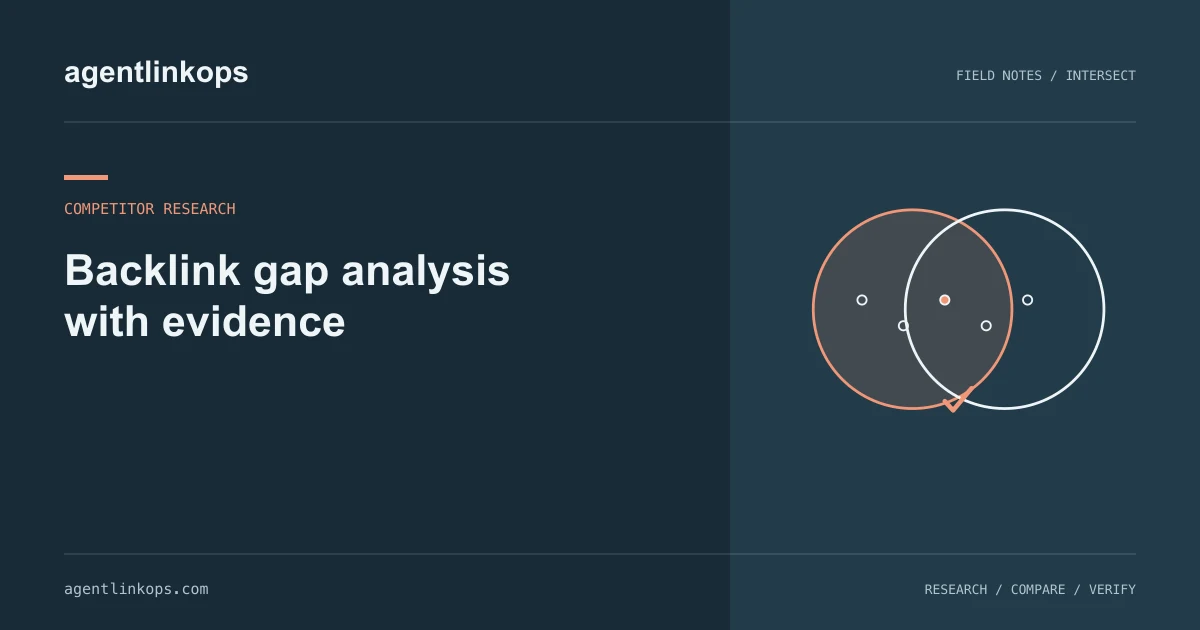
Backlink gap analysis compares the source pages or domains found for competitors with those found for your own site. The result is a research shortlist. A source missing from your inventory may deserve inspection, but that missing row alone does not prove the source has no link to you.
The competitor backlink research hub connects this comparison to source review and follow-up. Start with compatible inputs before turning differences into campaign priorities.
Freeze the inputs you are comparing
Save the target scope, collection dates, filters, and inventory identifiers. Use a named copy of each input so the report can be reproduced even if a provider updates its dataset tomorrow.
Scope matters. Comparing a competitor's entire domain with your single article creates a difference that may have little to do with missed opportunities. Choose the same level of target scope where possible, and describe any deliberate mismatch.
Vendor gap products use their own datasets and rules. Semrush's Backlink Gap documentation describes comparing referring domains across competing sites. A page-level comparison requires a separate choice about how individual source URLs are grouped.
Calculate a small synthetic gap
Suppose three fictional inventories contain these source domains. The letters identify made-up sources, not real publishers or customers.
| Source | Competitor Oak | Competitor Pine | Your inventory |
|---|---|---|---|
| A | Present | Present | Present |
| B | Present | Present | No row |
| C | Present | No row | No row |
| D | No row | Present | Present |
| E | Present | Present | Unresolved import |
B is a shared candidate missing from your inventory. C is a candidate found for one competitor. A and D already appear in your inventory, so they do not meet this particular gap rule. E remains unresolved because the input could not establish its membership.
A report that converts E to absence would inflate the shortlist. Keep it separate and resolve the import problem before rerunning the comparison. A clean calculation cannot repair an uncertain input by assigning it a convenient value.
Inspect the source behind the difference
Open the source pages for B. You may discover a curated industry resource page, a syndicated footer, or an obsolete directory entry. These cases have different meanings even though the domain occupies the same cell in the table.
Find the competitor's actual destination and surrounding passage. Ask what earned the reference: a dataset, membership, a useful tool, a local relationship, or something else. Then compare your own destination with that need.
If the source currently links to you too, record the observation and the inventory mismatch. The report still revealed a data gap, but it did not reveal an unearned placement. Keeping that distinction helps you judge the research system without manufacturing outreach work.
Apply exclusions consistently
Exclude irrelevant source families with a stated rule and a retained reason. Preview the rule across all compared inventories. If a domain groups several source rows, applying an exclusion to only one competitor's rows can distort the comparison.
Our exclusion rules guide explains how to preserve whole-group decisions. Keep a count of excluded groups beside the result, so a small shortlist does not conceal a large change in filtering.
Separate exclusion from missing evidence. A page outside campaign scope can be excluded confidently. A page that could not be retrieved remains unresolved. Both may stay out of today's outreach queue for different reasons.
Rank the review queue by the next question
A source shared by several competitors may deserve earlier review because it already covers the subject. That pattern does not guarantee that the publisher accepts suggestions or that your resource belongs there.
Use link intersect to examine shared sources, then compare exports fairly when the input formats or settings differ. Choose the next task from actual page evidence: review eligibility, improve the destination, locate the current edition, or stop pursuing the source.
Keep product prerequisites visible
AgentLinkOps gap research works with frozen, approved competitor inventories. Imported discovery records and competitor inventory binding are separate concerns; do not assume an arbitrary import can become a comparison input through any exposed tool. Live provider discovery remains subject to its admission and release gates.
For a reproducible result, record the approved inventory identifiers, comparison scope, exclusions, and unresolved groups. A colleague should be able to explain every candidate without treating a missing row as a verified absence. That is the difference between a usable research report and an inflated opportunity count.
Sources
- Backlink Gap · Semrush · Not stated; accessed September 12, 2026